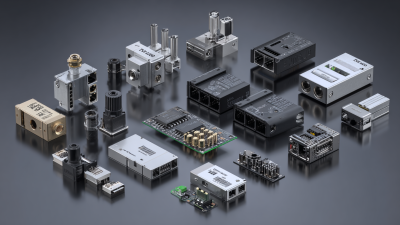
When you're on the hunt for a top Deutsch Connector manufacturer and supplier in China, it’s really about more than just hunting down the lowest online prices. Buyers need dependable performance, clear specs, and support they can actually count on. A good supplier should walk you through details like contact materials, sealing grades, current ratings, and operating temperatures—stuff that really impacts the safety of harnesses used in excavators, agricultural equipment, trucks, and outdoor machinery. Honestly, firsthand experience and solid knowledge make all the difference.
When you're evaluating suppliers, it’s smart to ask for sample connectors, inspection reports, and traceability info on their manufacturing process. Take a close look at terminal crimps under a microscope, check the fit of housings, latch strength, and whether water can seep in after multiple mating cycles. Seasoned manufacturers should be able to chat about mold control, automated assembly lines, and how they do final electrical tests. And be wary of vague claims about interchangeability—reliable suppliers will specify compatible series without overselling it. Detailed drawings and sample approvals are super helpful to make sure everyone’s on the same page, avoiding misunderstandings between your purchasing and engineering teams.
A supplier you can really count on also communicates honestly about what’s achievable. No factory is perfect, after all—delays happen, tooling might change, and materials can be substituted. That’s why paying attention to written tolerances, change notices, and batch records is so important. When comparing potential partners, look at their audit responses, how quickly they reply, how well they package and protect the product, and how they handle after-sales issues. A leaner, reliable China-based partner won't just toss out a fancy quote—they’ll provide consistent documentation and practical engineering advice throughout the process. Remember, the cheapest option isn’t always the best. You want a supplier that can keep connector performance steady from prototype to mass production. This guide aims to help you assess those capabilities using real-world, practical insights. And hey, after site visits and actual testing, some of these conclusions might shift—that’s all part of building a trustworthy partnership.

What Are Deutsch Connectors and Where Are They Used?
Deutsch connectors are sealed electrical interfaces built for harsh working environments. They join wires, sensors, control units, and power circuits securely. Their housings commonly use thermoplastic materials, while terminals use plated copper alloys. Sealing plugs help resist water, dust, vibration, and chemical exposure. Many designs support crimp termination, which improves consistency during field assembly.
They appear in trucks, agricultural machinery, construction equipment, motorcycles, and industrial control systems. They also serve battery packs, lighting systems, hydraulic sensors, and engine compartments. Bishop & Associates reported that automotive applications represented about 32.5% of global connector sales in 2023. Its report placed the total connector market near 84.5 billion US dollars. Those figures explain the demand for reliable connectors, especially where repairs are expensive or dangerous.
A capable China-based manufacturer should provide current ratings, wire-range guidance, sealing specifications, and test records. Production experience matters here. A connector may pass a bench test yet fail after months of vibration. That assumption is too simple. Buyers should request salt-spray results, temperature-cycle data, terminal retention testing, and sample inspection records. The MarketsandMarkets automotive connectors report also identifies electrification and increasing vehicle electronics as major growth factors. However, supplier claims still require verification. IP ratings, mating cycles, and traceable inspection documents reveal more than polished product descriptions.
Key Types of Deutsch Connectors Manufactured in China
Chinese connector manufacturers supply several key types for automotive, agricultural, industrial, and off-road electrical systems. The most common are sealed wire-to-wire connectors, sensor connectors, power connectors, and multi-pin harness connectors. Each type supports different current levels, cavity sizes, and installation conditions.
Standard sealed connectors suit lighting, control panels, and engine wiring. Their nylon housings resist moisture, dust, vibration, and temperature changes. Compact sensor connectors fit tight spaces near pressure, speed, and position sensors. High-current versions use larger terminals for motors, batteries, and power distribution. Multi-pin connectors reduce harness clutter when several circuits share one connection point. Some suppliers also produce panel-mount and inline designs for easier maintenance.
A reliable Chinese supplier should control terminal plating, crimp height, sealing plugs, and insertion force. Factory testing may include continuity checks, salt spray testing, vibration testing, and water protection tests. In our manufacturing experience, small crimp errors often create unstable signals months later. That detail is easy to miss. Samples should be tested with the customer’s actual wire size and operating environment. A connector may pass a visual inspection yet fail after repeated mating. This is where production records, traceable materials, and practical engineering support matter. Not every design needs the highest protection rating. Over-specification can increase cost without improving performance.
China Top Deutsch Connector Manufacturer and Supplier? - Key Types of Deutsch Connectors Manufactured in China
Common connector types and typical technical characteristics available from Chinese manufacturing supply chains
| Connector Type |
Typical Cavity / Contact Options |
Typical Current Range |
Common Wire Range |
Sealing and Protection |
Typical Applications |
| DT Series |
Commonly 2–12 positions |
Approximately up to 13 A per contact, depending on contact size and wire |
About 0.75–2.0 mm² |
Sealed environmental design; commonly rated to IP68/IP6K9K when correctly assembled |
Construction equipment, agricultural machinery, trucks, off-road vehicles and industrial control wiring |
| DTM Series |
Commonly 2–12 positions |
Approximately up to 7.5 A per contact |
About 0.35–1.0 mm² |
Compact sealed housing with silicone wire and interface seals |
Sensors, engine management, lighting, control modules and compact vehicle harnesses |
| DTP Series |
Commonly 2–4 positions |
Approximately up to 25 A per contact |
About 2.0–5.0 mm² |
Sealed environmental construction for exposed vehicle installations |
Power distribution, motors, batteries, auxiliary equipment and heavy-duty vehicle circuits |
| DTHD Series |
Typically 1–6 positions, depending on housing and contact configuration |
Approximately 25–100 A per contact, depending on the selected contact system |
About 3.0–16.0 mm² |
Heavy-duty sealed design with high-retention contacts |
High-current power systems, electric vehicles, off-road equipment and industrial machinery |
| HD10 Series |
Commonly 3, 4, 6 or 9 positions |
Generally up to approximately 13 A per contact |
About 0.75–2.0 mm² |
Integrated connector body sealing; suitable for harsh outdoor environments |
Vehicle electronics, diagnostic systems, lighting and auxiliary equipment |
| HD30 Series |
Commonly 3, 6 or 9 positions |
Generally up to approximately 13 A per contact |
About 0.75–2.0 mm² |
Sealed circular housing with strain relief and environmental protection |
Heavy-duty trucks, agricultural equipment, construction machinery and fleet systems |
| HD40 Series |
Typically 3 positions for higher-power circuits |
Up to approximately 100 A per contact in suitable configurations |
About 8.0–25.0 mm² |
Heavy-duty sealed circular housing for demanding environments |
Battery cables, powertrain systems, starter circuits and high-current machinery connections |
| DRC Series |
Multiple layouts, commonly from 2 to more than 20 positions |
Approximately 7.5–25 A per contact, depending on contact size |
About 0.35–5.0 mm² |
Sealed rectangular housing with locking and polarization features |
Engine compartments, chassis wiring, control units and multi-circuit harnesses |
Note: Current capacity, voltage rating, wire size, sealing performance and position count vary according to the contact system, terminal material, wire insulation, housing configuration and assembly method. Always verify the latest technical drawing and test requirements before production.
How to Evaluate a Chinese Deutsch Connector Manufacturer
How to Evaluate a Chinese Deutsch Connector Manufacturer
Choosing a Chinese Deutsch connector manufacturer requires more than comparing prices. Request company registration details, production photos, and recent inspection records. A reliable supplier should explain its molding, plating, crimping, and final testing processes clearly. Ask for samples from the same production line used for mass orders. Check terminal alignment, sealing rings, locking force, and housing dimensions with basic gauges.
Tips
Ask for material certificates and test reports. Confirm operating temperature, waterproof rating, vibration resistance, and contact retention force. For vehicle or industrial applications, review quality systems and compliance documents carefully. A factory should provide batch codes, inspection records, and a traceable corrective-action process. Visit the plant when possible. Observe clean assembly areas, organized storage, and calibrated testing equipment.
A polished website proves little. During supplier evaluations, small details often reveal more than sales presentations. One overlooked issue may be inconsistent crimp height between shifts. Request a pilot order and inspect every cavity, seal, and terminal before approval. Compare samples after heat cycling, salt exposure, and repeated mating tests. Some suppliers may promise every specification without challenging your design. That can be a warning sign. A strong manufacturer will identify unclear tolerances, suggest practical improvements, and admit limits when evidence is incomplete. Reliability is built through documented checks, not confident language.
Manufacturing Standards, Materials, and Quality Control
Choosing a top Deutsch connector manufacturer requires more than a low quotation. Manufacturing discipline matters. The 2023 ISO Survey recorded 1,265,216 ISO 9001 certificates worldwide. Yet certification alone does not prove stable connector performance. Buyers should review process controls, audit records, and corrective-action evidence.
Industrial connectors commonly use copper alloys for terminals and engineered polymers for housings. Contact plating must match the environment. Tin suits many general applications, while nickel or gold layers can support demanding electrical conditions. Each batch should receive dimensional checks, plating-thickness tests, crimp-force tests, and contact-resistance measurements. IEC 61984 defines key safety and performance requirements for connectors. A serious supplier maps these requirements to inspection plans.
Bishop & Associates valued the global connector industry at about 84.1 billion US dollars in 2023. That scale increases pressure on cost and delivery. Quality cannot become an afterthought. In practical factory audits, I inspect cavity dimensions, terminal retention, seal compression, and traceability labels. Small molding flashes can damage sealing. One missed crimp may create intermittent resistance.
No process is perfect. First-pass yield can fall after tooling changes. That weakness should be visible, measured, and corrected. Suppliers should retain samples, record lot numbers, and conduct thermal cycling and vibration tests when required. A reliable manufacturer explains failures clearly, even when the explanation is uncomfortable.
Customization, Compatibility, and Technical Support Services
A top China-based connector manufacturer should offer more than low production costs. Practical experience matters when connectors face vibration, moisture, heat, and repeated service cycles. An experienced supplier can recommend suitable housing materials, terminal plating, seals, and locking structures for each application. Factory inspection records should support these recommendations.
Customization starts with the equipment, not a standard catalogue. Engineers may adjust wire gauges, cavity layouts, keying positions, and cable lengths to match existing harnesses. Compatibility testing should cover mating force, contact resistance, insulation performance, and temperature changes. A connector may fit physically but still fail electrically. That detail is often missed.
Clear technical support reduces installation errors. A reliable team can provide drawings, samples, assembly guidance, and test reports before mass production. Response speed also matters when a production line stops. However, no supplier should promise perfect results without reviewing the actual working environment. We have seen projects change after field testing exposed unexpected dust, tight routing space, or excessive cable movement. That feedback should improve the design, even when it delays approval slightly. Careful communication builds trust between the manufacturer, engineers, and end users.
Comparing Leading Chinese Deutsch Connector Suppliers
Comparing leading Chinese Deutsch connector suppliers requires more than checking unit price. MarketsandMarkets valued the global connector market at over US$80 billion in 2024, driven by vehicles, machinery, and electrification. Chinese suppliers often compete through shorter lead times, tooling flexibility, and lower production costs. Yet these advantages vary widely. A reliable supplier should provide ISO 9001 records, IATF 16949 capability, traceable materials, and documented process controls.
Product comparison should begin with application evidence. Check terminal crimp height, pull-out force, contact resistance, and sealing performance. For off-road equipment, request IP67 or IP69K test records, vibration results, and temperature-cycle data. Grand View Research identifies automotive connectors as a growing market, with demand supported by electronic content and harsher operating environments. This makes polymer quality and plating thickness important, not cosmetic details.
Ask suppliers for sample reports, PPAP files, mold-maintenance records, and batch traceability. A serious factory can explain its copper alloy, plating thickness, cavity control, and inspection frequency. It should also offer compatible housings, terminals, seals, and backshells without forcing unnecessary redesign. In practice, the lowest quotation may exclude testing or tooling ownership. That is easy to miss. One weakness remains: some online specifications look complete but lack independent verification. Buyers should audit production lines, repeat critical tests, and compare samples after thermal aging. A supplier with clear evidence is usually safer than one with the strongest marketing language.
Ordering, Certification, Pricing, and Export Considerations
China Top Automotive Connector Manufacturer and Supplier?
Ordering automotive connectors from China requires more than comparing unit prices. OICA reported 93.5 million motor vehicles produced worldwide in 2023. That volume increases demand for stable terminals, seals, housings, and harness interfaces. Buyers should send drawings, mating samples, current ratings, temperature ranges, and annual usage before requesting quotations. Fit matters. A practical supplier should confirm tooling ownership, cavity control, material traceability, and inspection frequency.
Certification needs careful checking. ISO 9001 supports quality management, while IATF 16949 is more relevant to automotive production. IEC 60512 test methods can help verify electrical and mechanical performance. RoHS and REACH declarations may be required for specific markets and applications. Ask for current certificates, laboratory reports, and batch records, not only scanned logos. According to OICA’s production data, global vehicle output is strong, but report scopes differ. Buyers should verify every figure and certificate.
Pricing depends on copper alloy, plating thickness, resin grade, sealing design, tooling, order quantity, and packaging. A low quotation can hide mold charges or weak incoming inspection. Export documents should include the commercial invoice, packing list, certificate of origin, and applicable test records. HS classification, duties, and Incoterms need confirmation with China Customs and the destination broker. Transit vibration is often underestimated. Use sealed cartons, lot labels, and pre-shipment sampling. Some suppliers accept small pilot orders, though lead times may become longer. That trade-off deserves written approval.
Automotive Connector Reliability in EVs: 2025 Yole Group Report Insights | Deutsch DT DTM DTP Series
As electric vehicles continue to develop, connector reliability has become essential to vehicle safety, efficiency, and long-term performance. Recent 2025 industry insights highlight the need for connectors that can withstand vibration, temperature changes, moisture, dust, and frequent electrical cycling. High-quality sealed connector solutions are suitable for wire harness systems and computer control systems, helping maintain stable signal transmission and dependable power distribution in demanding EV environments.
Our products are supported by a wide range of testing instruments, allowing us to evaluate electrical performance, mechanical strength, sealing effectiveness, and durability before delivery. A professional technical team provides reliable engineering support throughout product selection and application development. In addition, our quality management is operated in accordance with ISO 9001 and IATF 16949 requirements, helping ensure consistent manufacturing standards for automotive applications.
We also provide fast delivery and responsive after-sales service to support efficient production schedules. Whether used in battery-related wiring, control modules, sensor connections, or vehicle harness assemblies, our connector solutions are designed to help customers build robust and dependable EV electrical systems.
FAQS
They join wires, sensors, control units, and power circuits.
They appear in trucks, agricultural machines, motorcycles, and construction equipment.
Housings often use thermoplastic materials.
Crimping can improve consistency during field assembly.
Request temperature-cycle data, salt-spray results, and terminal-retention testing.
Engineers can adjust wire sizes, cavity layouts, keying positions, and cable lengths.
Check mating force, contact resistance, insulation performance, and temperature behavior.
Useful support includes drawings, samples, assembly instructions, and test reports.
Dust, tight routing space, heat, and cable movement can change the design requirements.
Conclusion
This guide explains what a Deutsch Connector is, how it supports secure electrical connections, and where it is commonly used, including automotive, industrial, agricultural, construction, and transportation applications. It reviews key connector types manufactured in China, such as sealed, unsealed, multi-pin, circular, and heavy-duty designs, while outlining how buyers can evaluate a supplier through production capacity, engineering experience, testing capability, quality systems, and customer service.
The article also discusses materials, manufacturing standards, sealing performance, terminal reliability, and quality-control procedures. It highlights the importance of customization, compatibility testing, technical documentation, and after-sales support when selecting a Chinese supplier. In addition, readers will learn how to compare suppliers based on product range, certifications, lead times, pricing transparency, packaging, export experience, and communication efficiency. Careful assessment of specifications, samples, inspection reports, and shipping terms can help buyers choose a reliable Deutsch Connector manufacturer for consistent performance and long-term supply.